
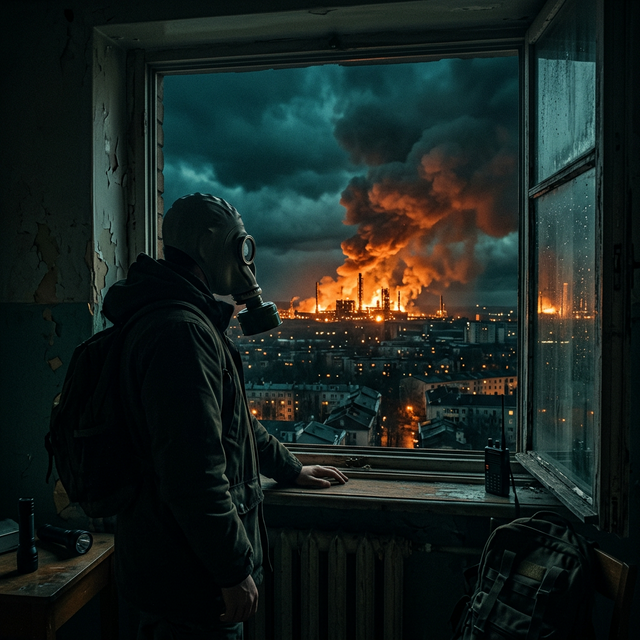

Environmental Hazards & Safety
Industrial accidents, toxic smoke from large fires, and hazardous transportation spills are realistic local emergencies. This guide covers how to quickly adapt your home to protect your family's air quality.
Recommended Gear for this Guide
Support our site by using our affiliate links to purchase verified equipment.
Coming SoonComing Soon
N95/P100 respirators for particle protection.
Coming SoonComing Soon
HEPA air purifiers for indoor air quality.
Chemical or biological hazards sound extreme, but a localized industrial fire, agricultural chemical spill, or a derailed freight train can quickly compromise a neighborhood's air quality. Knowing how to efficiently shelter from airborne contaminants is a vital preparedness skill.
Environmental Hazards & Safety
1. Chemical Spills & Toxic Smoke
If local authorities issue an alert regarding an industrial accident or massive fire:
- Evacuation Basics: If instructed to leave, move across the wind (perpendicular to the wind direction) rather than simply running straight away from the source. This gets you out of the plume's path faster. Because many chemicals are heavier than air, favor higher ground.
- Sheltering in Place: If you cannot evacuate, immediately move everyone inside. Close all windows and doors. Turn off the HVAC system, window AC units, and bathroom exhaust fans to prevent drawing outside air in.
- Creating a Clean Room: Identify an interior room. Use pre-cut plastic sheeting and duct tape to seal the gaps around the door frame, windows, and air vents to temporarily prevent toxic air from entering. WARNING: A completely sealed room has a limited supply of oxygen. This is strictly a temporary measure (2-4 hours maximum) while a toxic plume passes over your area. Prolonged sealing will result in fatal CO2 buildup.
2. Biological / Viral Disruptions
Recent history has proven that biological respiratory threats require a structured hygiene protocol.
- Filtration: Maintain a supply of high-quality N95 or P100 masks for instances where you absolutely must enter crowded public spaces during an outbreak.
- Air Purification: Running a HEPA air purifier inside your home can significantly reduce the concentration of airborne viruses, pollen, and smoke particles.
- Cross-Contamination: Establish a "dirty zone" right inside your front door where shoes and outer layers are removed and hands are sanitized immediately before entering the rest of the living space.
3. Decontamination Basics
- If you suspect you have been exposed to hazardous chemicals or thick, toxic smoke, remove all outer clothing before entering your home's clean areas. Place the clothing in a sealed plastic bag.
- Wash your skin with large amounts of lukewarm water and mild soap. Avoid scrubbing aggressively, as this can cause micro-abrasions that push chemicals deeper into the skin.