
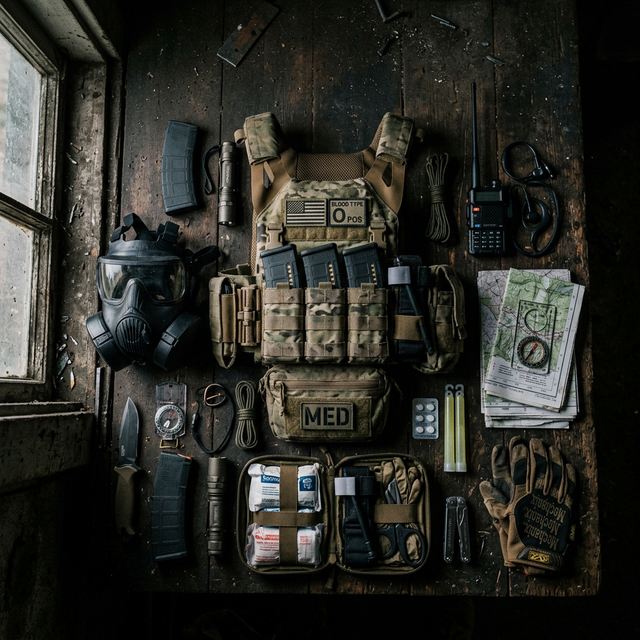

Civil Emergency Preparedness
Whether facing a severe natural disaster, industrial accident, or regional instability, choosing whether to evacuate or shelter-in-place is critical. This guide covers how to execute both safely.
Recommended Gear for this Guide
Support our site by using our affiliate links to purchase verified equipment.
Coming SoonComing Soon
N95/P100 respirators for particle protection.
Coming SoonComing Soon
Pre-packed 72-hour emergency backpack.
Large-scale emergencies—from unprecedented flooding to civil unrest—require swift decision-making. Having a plan ahead of time prevents panic and ensures your family departs safely or remains securely at home.
Civil Emergency Preparedness
1. Evacuation: The "Go-Bag"
If authorities issue an evacuation order, you may not have time to pack. You need a dedicated backpack capable of sustaining an individual for 72 hours.
- Bag Contents: Prioritize water filtration, high-calorie snacks, a first aid kit, flashlights, copies of IDs, and physical cash.
- Route Planning: Main highways often become congested during evacuations. Map out primary and secondary routes using local backroads to ensure you can leave the area efficiently.
- Appropriate Clothing: Wear sturdy, comfortable hiking or athletic clothing and closed-toe shoes. You want to be comfortable and capable of walking long distances if a vehicle breaks down.
2. Sheltering In-Place
If the roads are unsafe or the emergency is environmental outside, your home is your primary refuge.
- Securing the Property: Ensure all doors and windows are locked. If there is civil unrest, drawing the blinds and moving to interior rooms away from street-facing windows is a sensible precaution.
- Environmental Sealing: In the event of an industrial smoke plume or chemical spill nearby, have plastic sheeting and duct tape ready to temporarily seal the gaps around the doors and vents of an interior room to maintain clean air. WARNING: A sealed room consumes oxygen and builds up CO2 rapidly. This is strictly a temporary measure (maximum 2-3 hours) for passing plumes. Prolonged sealing without ventilation can be fatal.
3. Navigating Disrupted Areas
If you must travel during an active, severe emergency, proceed with extreme caution.
- Daylight Movement: Whenever possible, travel during daylight hours when visibility is best and road hazards are easily spotted.
- Avoid Congestion: Steer clear of likely flashpoints, flooded underpasses, and overly crowded central hubs.
- Digital Maps: Download offline maps of your region onto your phone in advance, as cellular internet may be highly unreliable or completely unavailable.