
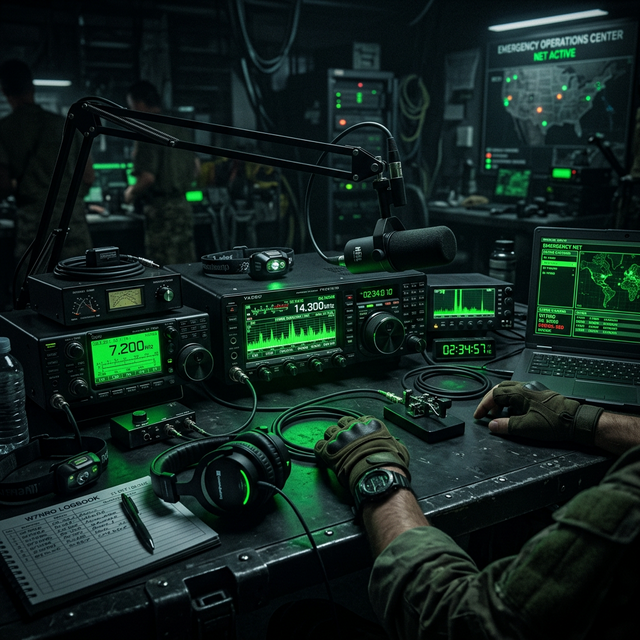

Alternative Communication Strategies
Cell towers can become overloaded or lose power during large storms or public events. This guide covers the basics of staying informed and establishing a reliable family communication plan.
Recommended Gear for this Guide
Support our site by using our affiliate links to purchase verified equipment.
Coming SoonComing Soon
Solar/hand-crank emergency radio.
Coming SoonComing Soon
Family walkie talkies for local communication.
During major weather events, internet and cellular networks can be disrupted. Having alternative ways to receive news and check on family members significantly reduces stress and ensures everyone is on the same page.
Communication & Coordination Strategy
1. Alternative Information Sources
A dedicated emergency radio is a cornerstone of basic preparedness. Look for a model that features AM/FM bands and can be powered multiple ways: battery, USB, solar, or hand-crank.
- When local internet drops, radio broadcasts are often the most reliable way to receive civic announcements, weather updates, and emergency instructions.
2. The Family Connectivity Plan
It is highly recommended to establish a plan before you need it. What happens if cellular networks are down while the kids are at school and parents are at work?
- The Rally Point: Establish a predetermined, safe meeting location (like a specific relative's house or community center). If communication fails entirely, everyone knows exactly where to go.
- The Out-of-Area Contact: During local disasters, regional phone lines often jam, but long-distance routing sometimes succeeds. Designate a relative who lives in another state or country as your central "switchboard" for everyone to check in with.
3. Short-Range Comms
For staying in touch within a neighborhood or during a road trip, standard Walkie Talkies (PMR446 or GMRS) are highly effective. They require no cellular network and are perfect for coordinating logistics or keeping track of kids around the property.