

Home Security & Weatherproofing
Your home is your primary shelter during a disruption. This guide outlines practical steps to improve physical security, manage extreme temperatures, and ensure basic sanitation when municipal services are interrupted.
Recommended Gear for this Guide
Support our site by using our affiliate links to purchase verified equipment.
Coming SoonComing Soon
Upgraded strike plates and heavy-duty door hardware.
Coming SoonComing Soon
Shatter-resistant window security film.
Whether facing a multi-day power outage during a blizzard or seeking peace of mind during community-wide emergencies, your home must be able to protect your family from the elements and opportunistic crime. Minor upgrades can dramatically improve a standard home's resilience.
Home Security & Weatherproofing
1. Practical Perimeter Security
- Deterrence: Ensure the exterior of your home is well-lit with motion-sensor lights. Avoid leaving expensive tools, bicycles, or equipment visible in the yard.
- Reinforcing Entry Points: The weakest point of any deadbolt is the wooden door frame. Replace standard half-inch strike plate screws with 3-inch steel wood screws to anchor the lock deep into the wall studs. Apply security film to ground-floor windows to prevent them from shattering easily.
2. Temperature Management Without Power
In a deep winter, a home without central heating can quickly become dangerously cold.
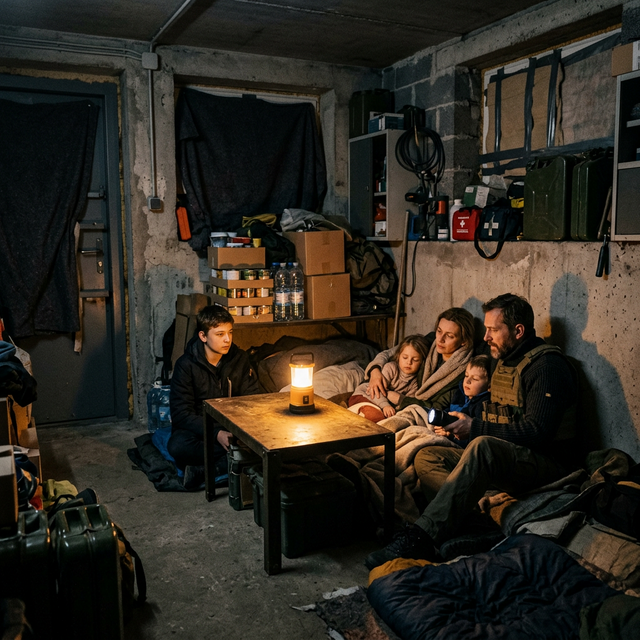
- The Micro-Climate Strategy: Select one interior room (preferably south-facing or well-insulated) to act as the primary living space. Block drafts by rolling towels under the door and hanging thick blankets over the windows. The combined body heat of a family is surprisingly effective in a small space.
- Cold-Weather Gear: Invest in high-quality, cold-rated sleeping bags. They are far more efficient at trapping body heat than layering multiple thin blankets.
- Safe Heating: If using a portable indoor propane heater, ensure it is specifically rated for indoor use and always keep a window slightly cracked. SAFETY WARNING: Never sleep while a fuel-burning heater is running inside. Always use a battery-powered carbon monoxide detector in the same room.
3. Emergency Sanitation
If municipal water lines lose pressure, standard toilets will not flush automatically.
- Manual Flushing: If you have stored non-potable water (like from a bathtub or rain barrel), you can manually flush the toilet by quickly pouring a gallon of water directly into the bowl.
- Dry Toilets: In absolute emergencies with zero water, line a toilet bowl or sturdy 5-gallon bucket with heavy-duty garbage bags. Keep a supply of sawdust, cat litter, or lime to cover waste after each use to control odor and maintain hygiene. Tie off and store bags securely outside until regular trash service resumes.