
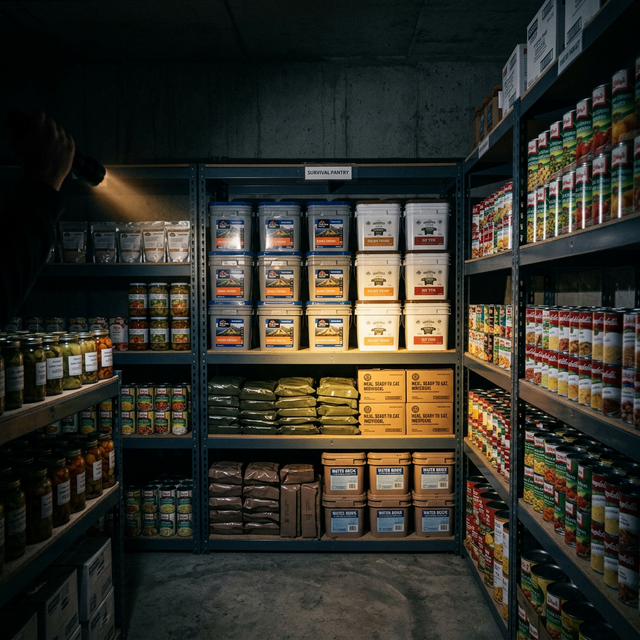

The 30-Day Family Pantry
Building a practical, 30-day rotating pantry ensures your family is insulated from unexpected supply chain delays. Here is how to stock up affordably without hoarding.
Recommended Gear for this Guide
Support our site by using our affiliate links to purchase verified equipment.
Coming SoonComing Soon
Freeze-dried emergency meals with long shelf life.
Coming SoonComing Soon
Portable camping stove for off-grid cooking.
Modern grocery stores rely on 'just-in-time' delivery. If regional transport is delayed by weather or civil emergencies, supermarket shelves empty very quickly. Keeping a month of food at home provides immense peace of mind and saves you from rushing to the store during an emergency.
The 30-Day Family Pantry
1. Caloric Efficiency
An emergency pantry should focus on shelf-stable, calorie-dense foods that your family already enjoys eating.
- The Base Staples: Rice, dried beans, pasta, and oats are affordable, filling, and have an excellent shelf life when kept in airtight containers.
- Fats & Proteins: Stock items rich in protein and healthy fats, such as peanut butter, canned tuna, and olive oil, which provide sustained energy.
- Ready-to-Eat Alternatives: Freeze-dried meals are convenient because they only require boiling water and have up to a 25-year shelf life, making them a great "set and forget" option for the back of the closet.
2. Cooking Without the Grid
If your home uses an electric stove, a power outage complicates mealtime.
- Safe Alternatives: A simple portable camping stove with extra fuel canisters allows you to boil water and cook hot meals. CRITICAL WARNING: Camping gas stoves produce deadly, odorless carbon monoxide. They should be used outdoors whenever possible. If you must use them indoors during a severe emergency, ensure you have cross-ventilation (multiple open windows) and a battery-powered CO detector active.
3. The "Store What You Eat" Concept
The most cost-effective way to build a pantry is by actively using it.
- When you buy groceries, pick up two of a non-perishable item instead of one. Place the new items at the back of the shelf and consume the older ones first (First-In, First-Out). This creates a naturally rotating, fresh reserve without a massive upfront cost.