
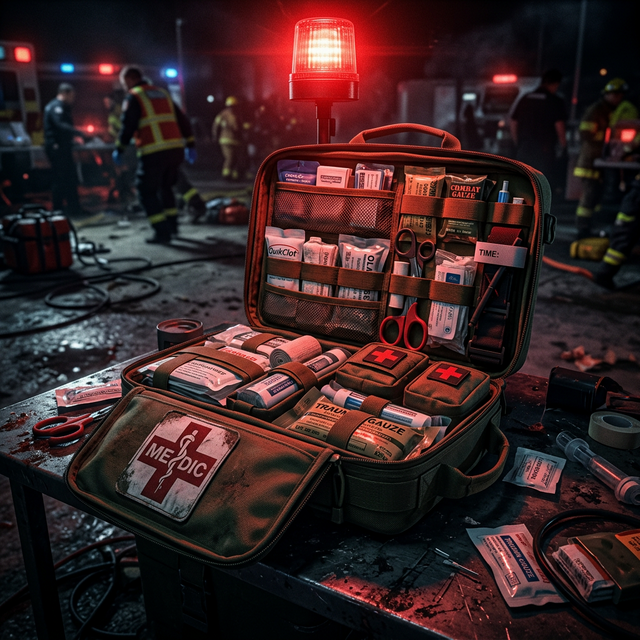

Emergency First Aid & Trauma
Having a proper first aid kit and basic medical knowledge ensures you can confidently handle household accidents or severe injuries when emergency services are delayed.
Recommended Gear for this Guide
Support our site by using our affiliate links to purchase verified equipment.
Coming SoonComing Soon
Combat-rated tourniquet for emergency bleeding control.
Coming SoonComing Soon
Pressure bandage for severe wounds.
During major storms or public emergencies, roads may be blocked and local hospitals can experience high patient volume. Being able to provide immediate, effective first aid for your family is a critical household skill.
Effective Family First Aid
1. Severe Bleeding Control
In the event of an accident involving glass or tools, stopping severe blood loss is the immediate priority.
- Tourniquets: A quality tourniquet (like a NAR CAT) is a highly effective tool that should be in every home and vehicle kit. It is designed to be placed high on a limb and tightened until bleeding stops. Always purchase verified medical brands, not cheap replicas.
- Wound Packing: For areas where a tourniquet cannot be applied, hemostatic gauze (which promotes rapid clotting) should be firmly packed into the wound and held with direct pressure until help arrives.
2. Preventing Shock & Hypothermia
When a person experiences significant trauma or exposure, their body temperature can drop rapidly, which inhibits the blood's ability to clot.
- The Mylar Blanket: Always keep a thermal emergency blanket (Mylar) or heavy sleeping bags in your kit. Retaining body heat is crucial for stabilizing an injured person while waiting for paramedics.
3. Everyday Medicines & Prescriptions
In addition to trauma supplies, managing everyday health is vital during a disruption.
- Ensure you maintain at least a one-month buffer of any daily prescription medications your family relies on. Supply chains for pharmacies can be temporarily delayed during large-scale weather events.