
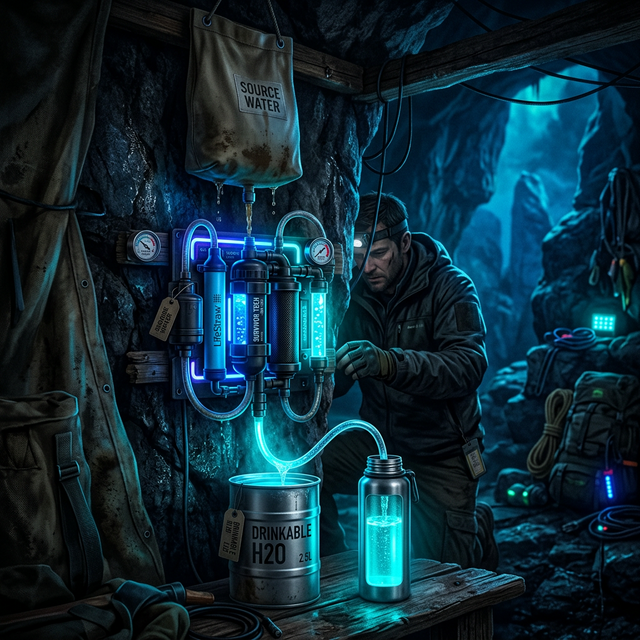

Water Purification Methods
Clean water and sanitation are the pillars of family health during an emergency. This guide covers practical methods for sourcing and properly filtering water if municipal lines are temporarily compromised.
Recommended Gear for this Guide
Support our site by using our affiliate links to purchase verified equipment.
Coming SoonComing Soon
Gravity water filter for family use.
Coming SoonComing Soon
Emergency water storage containers.
In severe weather events or infrastructure failures, tap water might be placed under a 'boil water advisory' or stop flowing entirely. Having the right tools to filter and store water ensures your family stays hydrated and healthy until services are restored.
Water Sourcing & Purification
1. Secondary Water Sources at Home
Before looking outside, consider these secondary reserves inside your house:
- The Water Heater: Your home water heater safely holds 40-50 gallons of clean water. You can access it via the drain valve at the bottom. Warning: You must completely shut off the electricity or gas supply to the heater before draining to prevent element burnout or explosive gas leaks.
- The Toilet Tank: The water in the upper reservoir tank (not the bowl) is clean tap water. This is a viable backup source provided you don't use chemical cleaner blocks in the tank. Warning: Thoroughly boil or purify this water before drinking. It is best reserved for hygiene or flushing purposes.
- Rainwater Collection: Catching rain is an excellent supplement for washing or flushing toilets. If you intend to drink it, remember it must be properly filtered first as it washes over roofing materials.
2. Filtration vs. Purification
It is important to understand the difference between removing sediment and neutralizing pathogens.
- Filtration: High-quality microfilters (like Sawyer or Berkefeld) remove 99.9% of bacteria, parasites, and dirt. For most outdoor or emergency situations, this is sufficient.
- Purification: Viruses are much smaller than bacteria and can pass through standard filters. If you are drawing water from a questionable or stagnant source, you should purify the filtered water using water treatment drops (Chlorine Dioxide) or boiling.
3. The 1-Minute Boil Rule
The most foolproof way to make sure water is pathogen-free is boiling. Bring filtered water to a rolling boil for 1 full minute (or 3 minutes if you live at high altitudes). Let it cool, and it is perfectly safe to consume.